
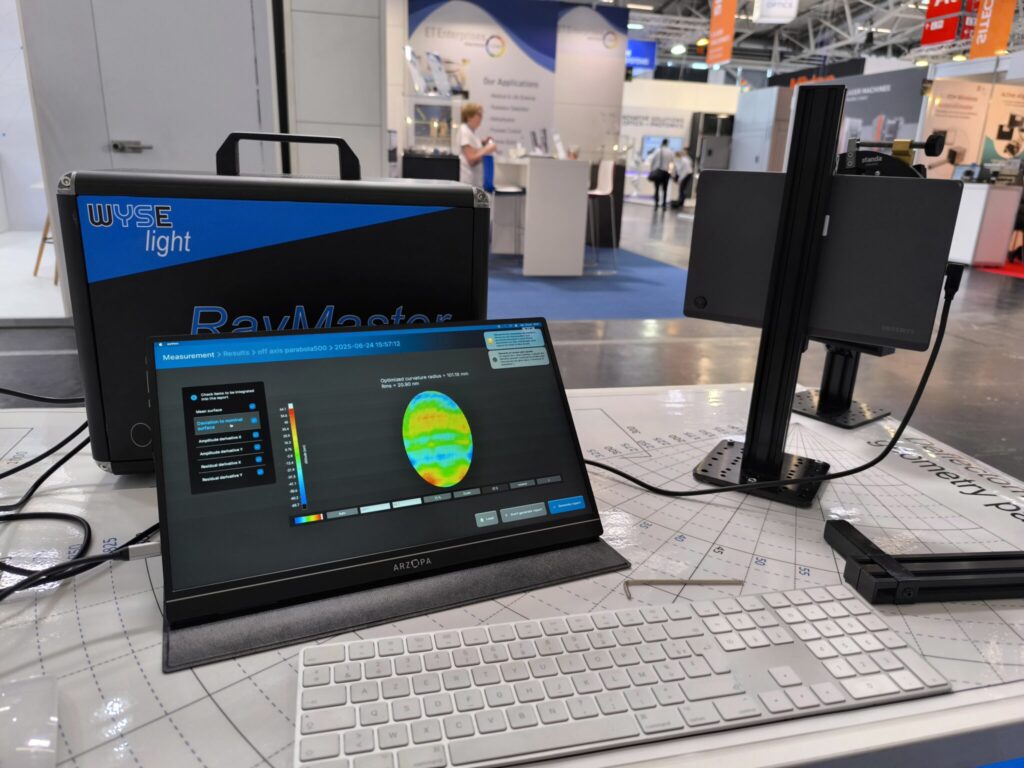
RayMaster 10 Product Highlights
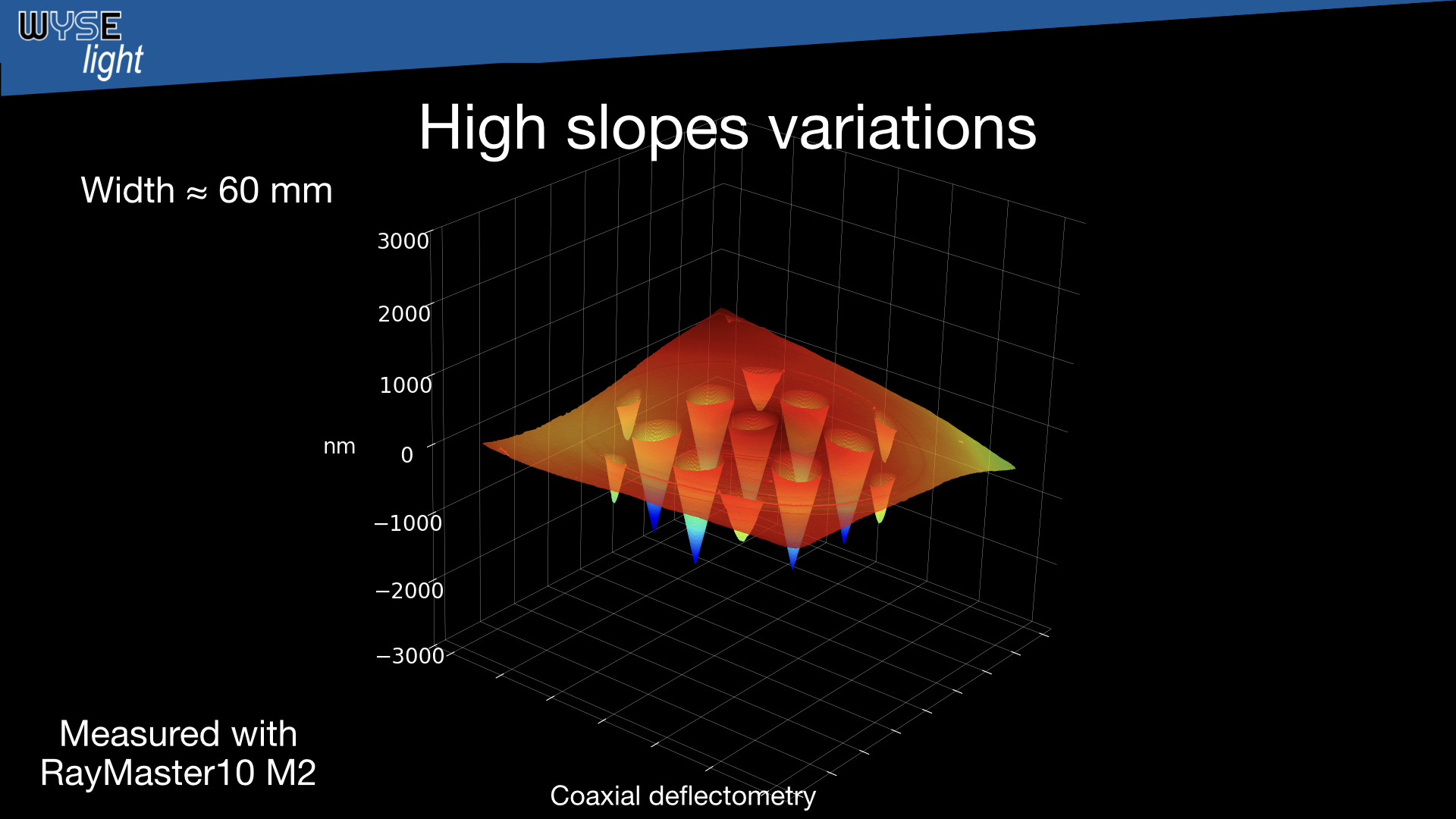
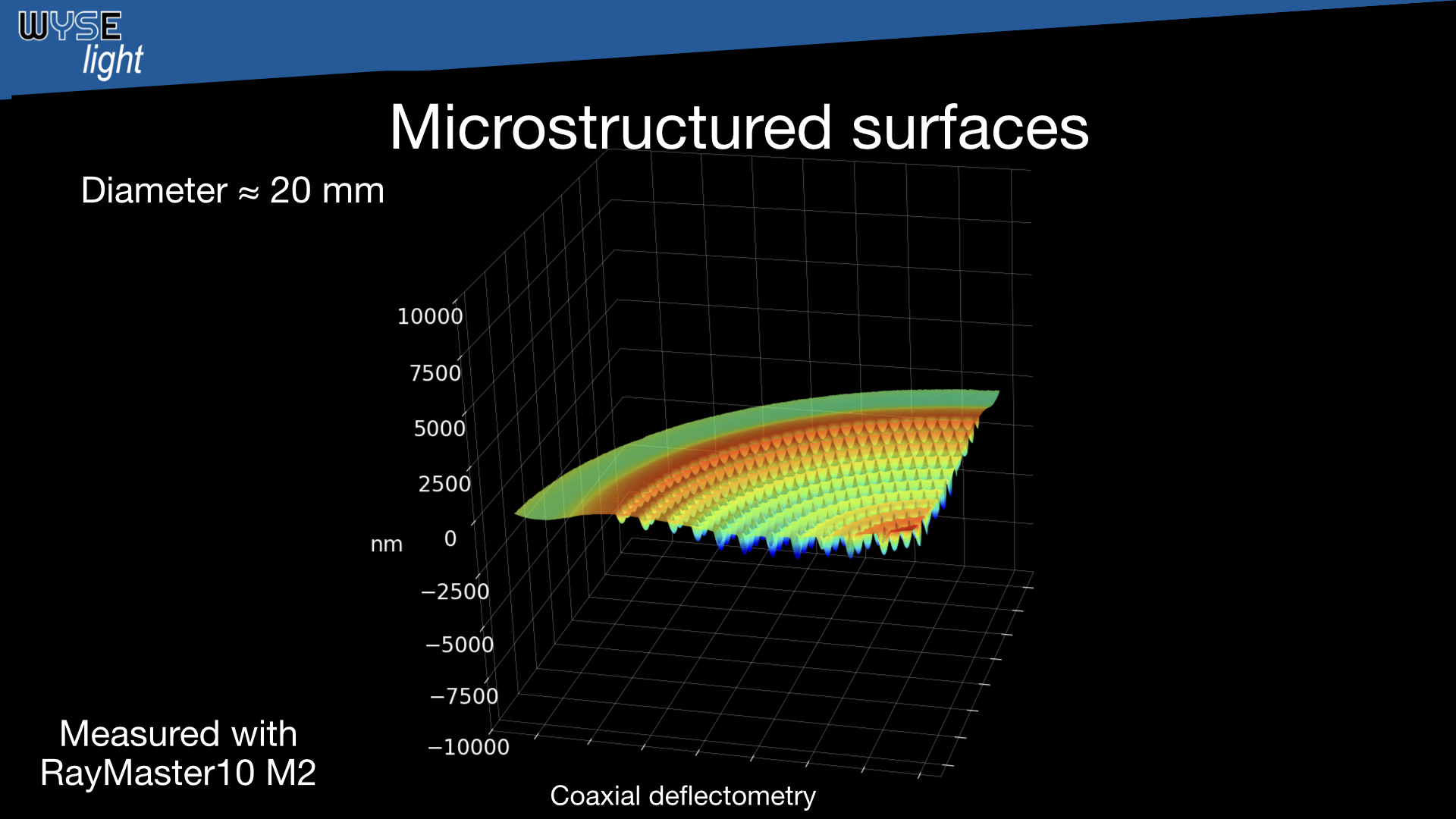
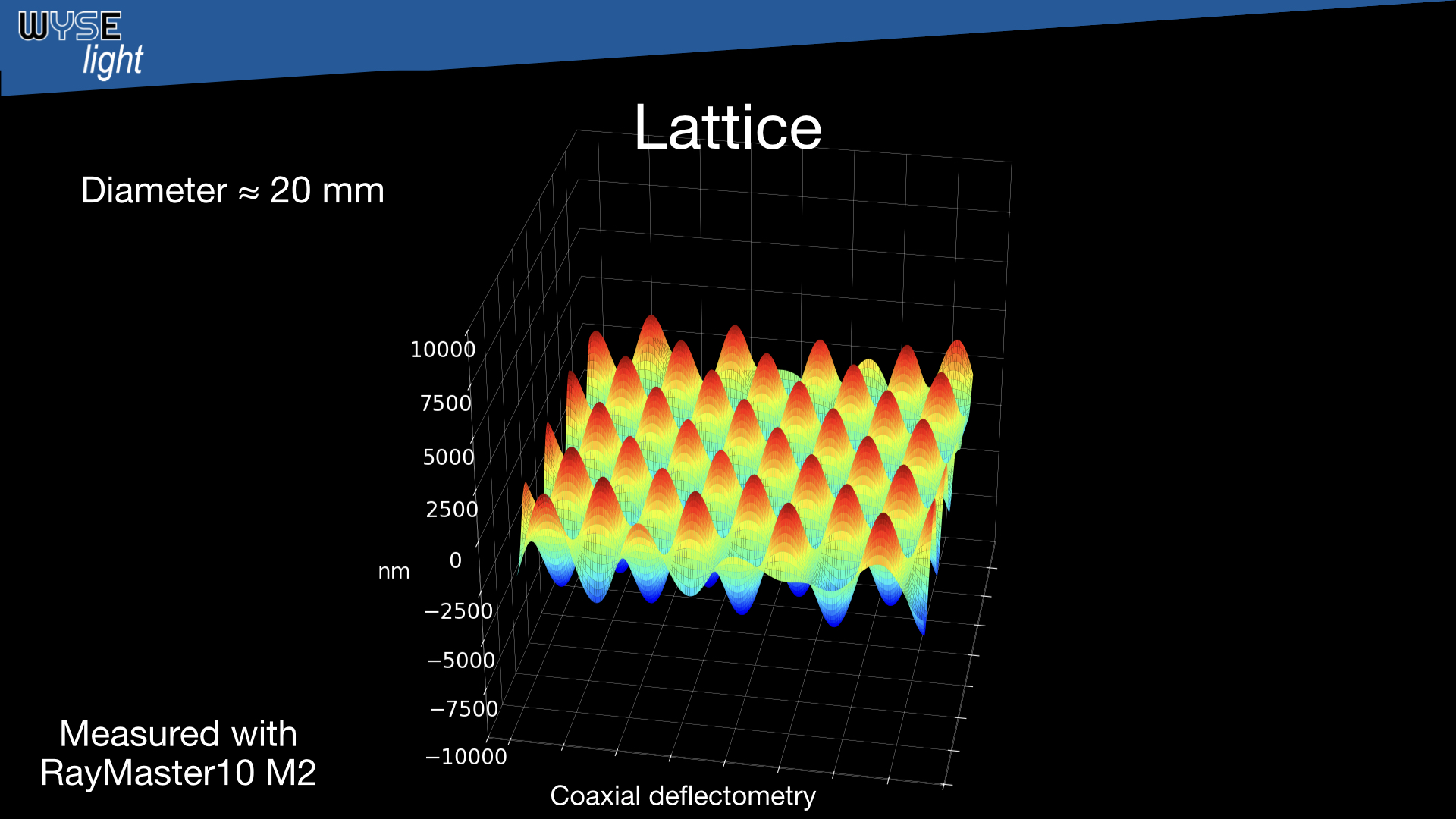
- Suitable for reflective and semi reflective surfaces (flat, concave, convex, asphere, freeform) even with a relatively low relectivity index like glass (4% reflectivity index). The surface must present a specular reflection to be measured.
- Insensitive to vibrations.
- Non-contact.
- Fast single shot measurement (acquisition in 10 seconds, processing time a few minutes).
- Easy to use, push button device. Suitable for shop floor workers with minimal training (1-2 hours). Separate preparation and simulation interface for optical engineers.
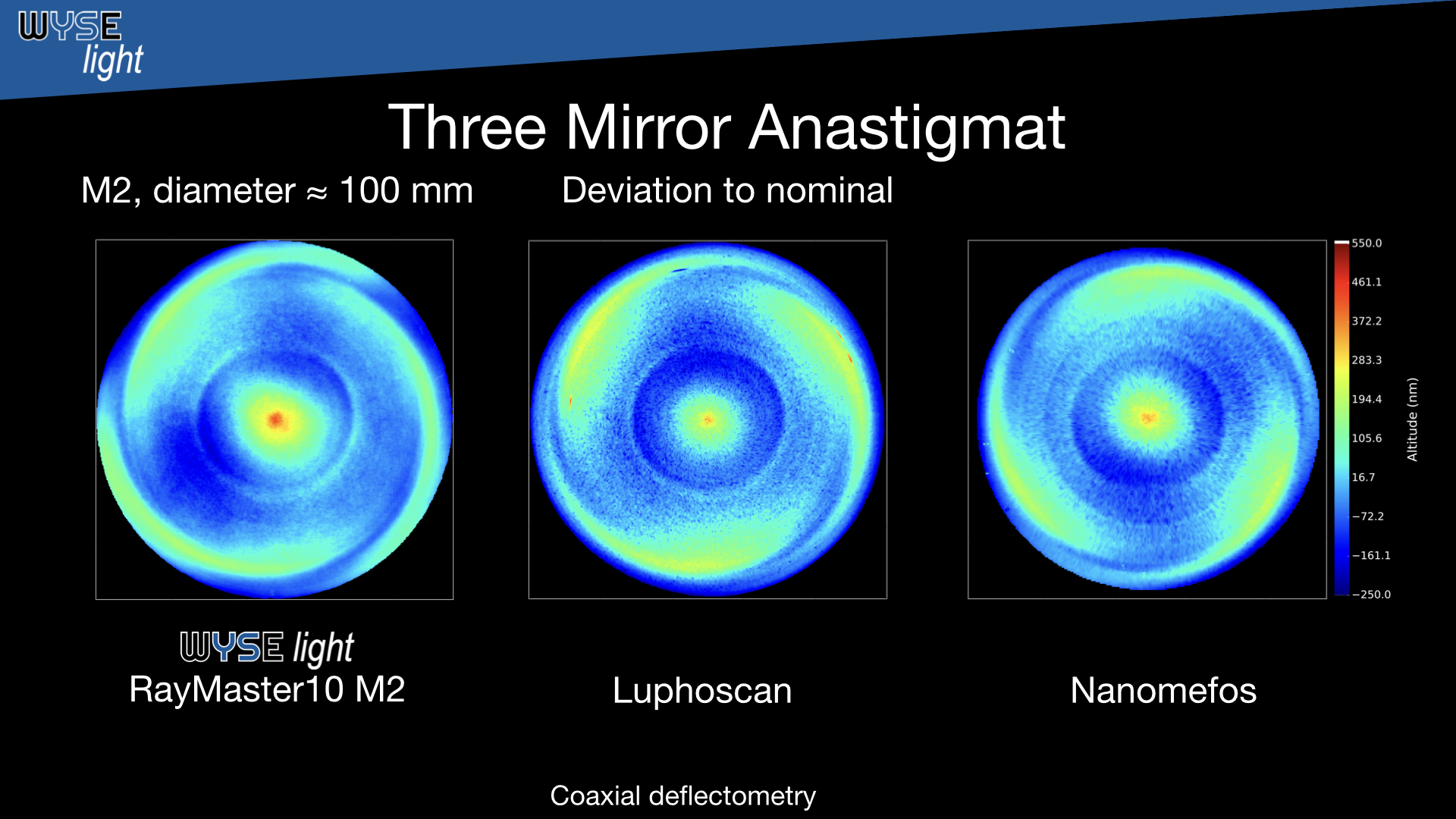
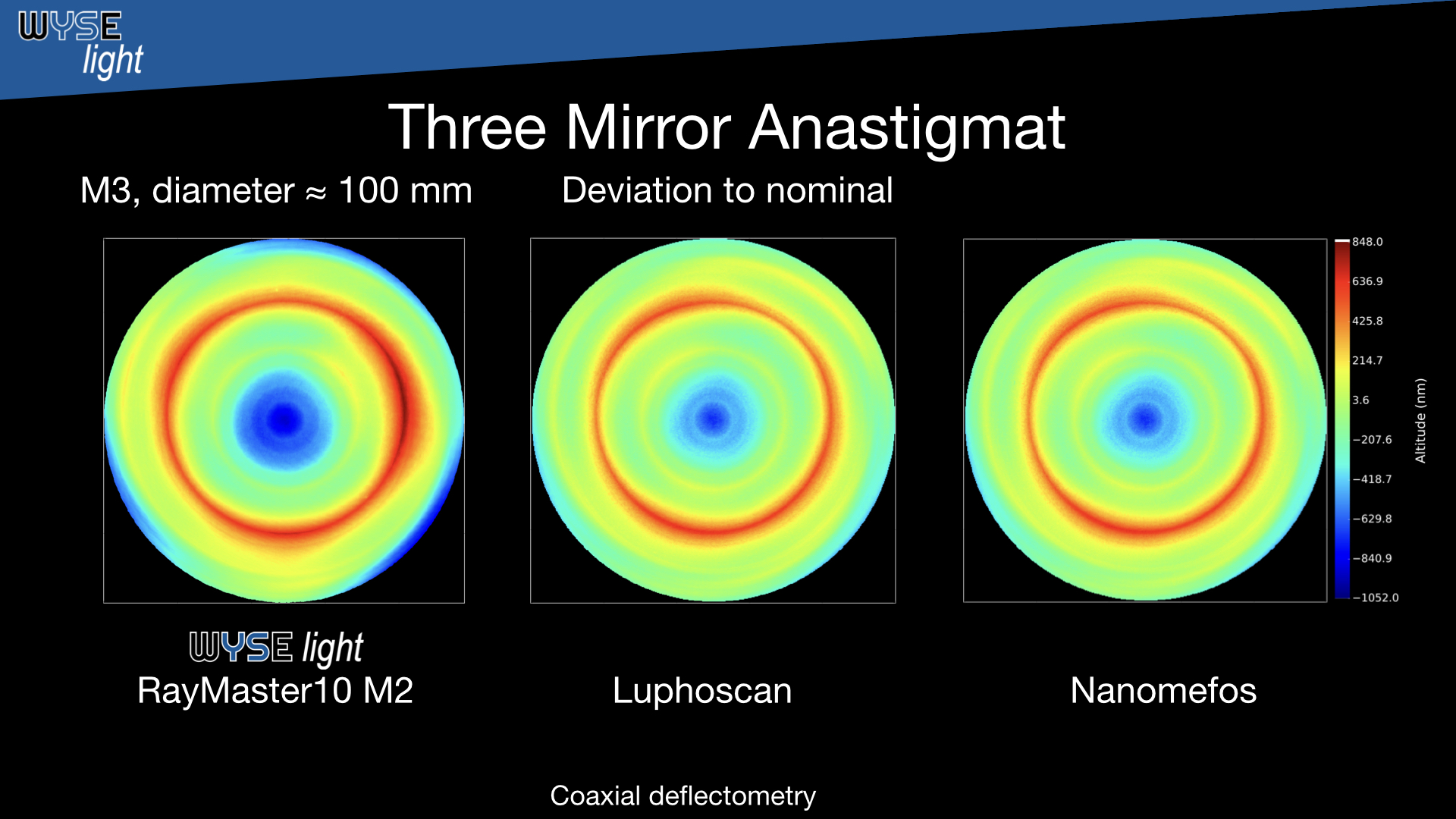
- Typical uncertainty of 15 nm RMS. The 15 nm we refer to is the mean RMS we observe between our measurements and others made with alternative systems (Zygo, Luphoscan or Nanomefos), it is rather an empirical value not resulting of a strict uncertainty evaluation.
- Results files format : (x,y,z) points map in .npz and .dat formats (other formats upon request)
Specifications
| Accuracy (RMS), mid and high spatial frequencies | 10-15 nm |
| Repeatability (RMS) | +/-2 nm |
| Relative accuracy, low spatial frequency (radius of curvature) | 0,1 % |
| Sensibility to slopes | 1 µrad |
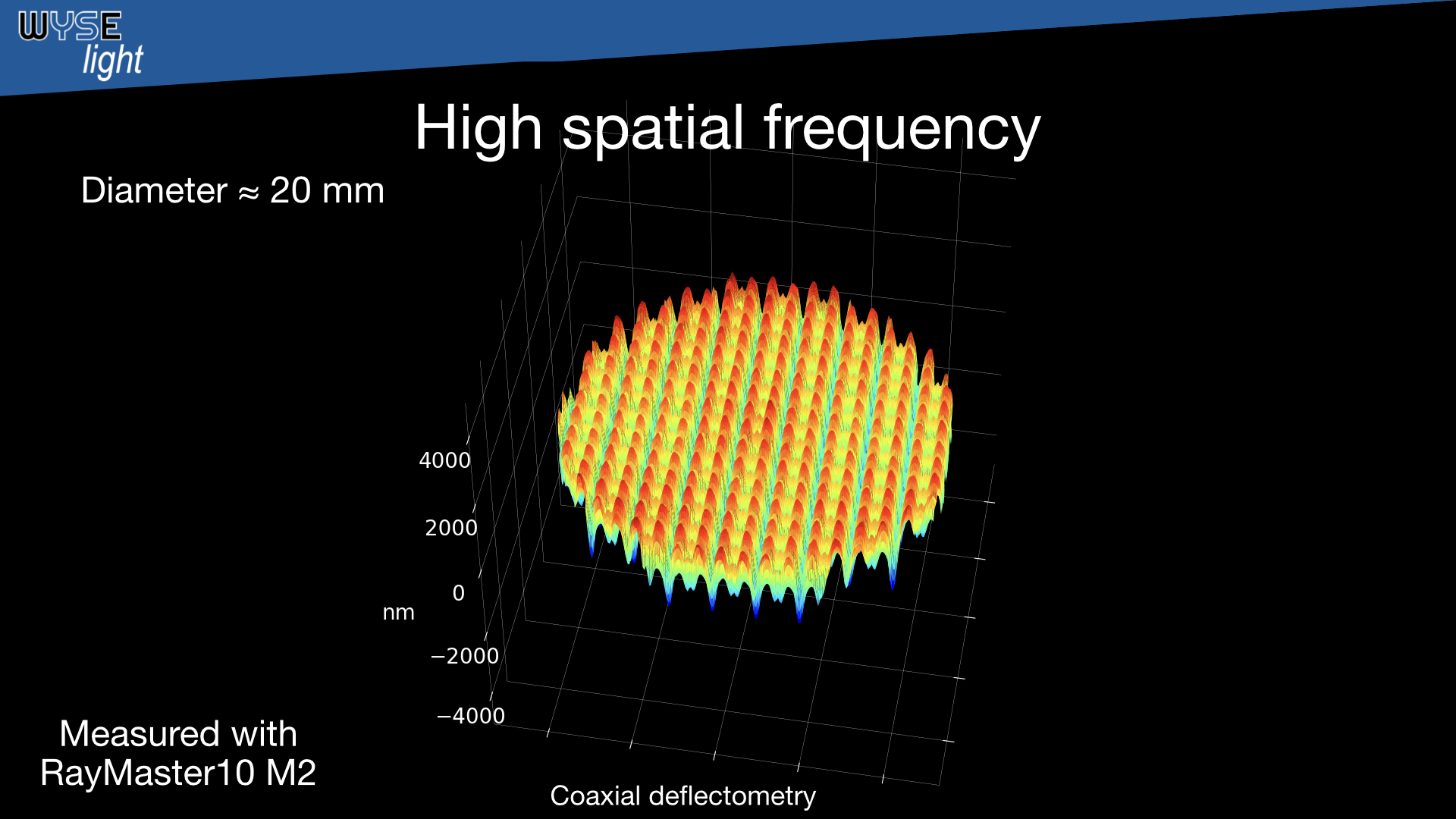
| Spatial resolution (at 600 mm working distance) | 50 µm |
| Modes of operation | a) Blind (no knowledge of nominal shape) b) Smart (gives deviation to nominal shape) |
| Optical axis orientation | Horizontal |
| Optical axis height | 240 mm |
Simple setup and operation
Setting up the full configuration after unboxing requires no more than 30 minutes. It operates on a standard office desk. No need for an optical bench.
Performing measurements requires prior identification steps that are carried out initially in our facility. It is recommended to run those identification steps from time to time on site to prevent precision deviation which can occur after brutal handling, or significant repeated temperature variations in the lab. The process is simple and mainly automated. All in all, it takes about 30 minutes.
Measurement is very simple too. It consists of two steps :
- Tablet identification: the images displayed on the tablet during measurement must reflect on the part to be measured. To maximize accuracy, the tablet should be placed at an optimal distance and angle from the part so that the images fully reflect on the part. Then the system records the position of the tablet.The process is simple and takes only 1mn with minimal handling. You can make as many measurements as you wish afterwards without repositioning.
- Part measurement: once the system has recorded the tablet position (tablet identification step above), the measurement can take place. The measurement process is automatic. The camera inside the Raymaster 10 moves automatically to acquire different pictures of the object, at different distance. The images are then processed by the calculator and the result is displayed on the screen with information relative to the precision of the measurement. This a a full field single shot. No image stitching needed as long as the size of the tablet fits the size and shape of the part. If the part is too large, the standard tablet can be replaced by a larger one or a display monitor with adequate specifications.